

How to Publish a Family History in South Dakota
From the State Archives to a printed book on the shelf: a practical guide for South Dakota families.
By Pasque & Prayrie
Every South Dakota family has a story worth keeping: the homestead claim, the blizzard of ’49, the ranch that’s been in the family for four generations, the grandmother who taught in a one-room school. Too often those stories live in a shoebox of letters or in one relative’s memory. A printed family history keeps them together for the next generation.
Here’s how to take a family history from research to a finished book, with the South Dakota resources we point our authors to.
1. Decide what kind of book it is
Before you research, decide what you’re making. The three most common kinds are:
- A narrative history: the family’s story told in chapters, often by generation or by place.
- A genealogy: a record of descendants with dates, places and sources, often with short biographies.
- A memoir or keepsake: one person’s memories, recipes, photos and letters.
Many good family histories combine them: a narrative with a genealogy chart in the back. Deciding early saves hours of research you won’t use.
2. Gather what the family already has
Start with the people. Record interviews with older relatives, even on a phone, and ask about specific places and events rather than general questions. Then collect photos, letters, diaries, Bibles with family records, homestead papers, obituaries and church records. Scan photos at high resolution (at least 600 dpi for small prints) and write down who is in them while someone still knows.
3. Use South Dakota’s records
- South Dakota State Archives, Pierre: part of the South Dakota State Historical Society at the Cultural Heritage Center. Its collections include newspapers, naturalization records, cemetery records, biographies and other materials useful to family historians.
- Historic newspapers: the State Historical Society has digitized many South Dakota papers for the Library of Congress’s free Chronicling America site. Search for family names, local news columns and obituaries.
- County records: deeds, probate and court records are kept by county offices; homestead land-entry files are held by the National Archives.
- Vital records: birth, death, marriage and divorce records are handled by the South Dakota Department of Health’s Vital Records office in Pierre.
- Local historical societies and libraries: county histories published for anniversaries and centennials are often packed with family sketches and photos.
- The South Dakota Genealogical Society and local genealogy groups can help with brick walls.
Cite your sources as you go, even informally. Future relatives will want to know where a date came from.
4. Write it so people will read it
The difference between a family history people keep and one they shelve is story. Lead each chapter with a scene: the day the family arrived, the fire, the wedding. Then fill in dates and details. Keep long lists of descendants for an appendix. Write in your own voice; you don’t need to sound like a textbook.
5. Get it edited
Family histories are full of names, dates and spellings that must match from page to page, which is exactly what a copyeditor checks. An editor will also catch the places where you know what you meant but a cousin in Oregon won’t. If you’re not sure where to start, a free 1,000-word sample edit will show you what an edit adds.
6. Design it around the photos
Old photographs are often the heart of a family history. Plan the layout around them: captions with names and dates, a family tree chart, and maps of where the family lived. A larger trim size, such as 8×10 or 8.5×11, gives photos room.
7. Print it: private copies or a public book
- For the family only: print a set number of copies through a print-on-demand service, with no ISBN needed.
- For the public: publish on Amazon KDP and IngramSpark so relatives anywhere can order it, and local libraries and historical societies can add it to their collections. For that, you’ll want your own ISBN. (See Do you need your own ISBN?)
Consider donating copies to the State Archives, your county library and the local historical society, so your family’s story becomes part of the region’s history too.
How we help
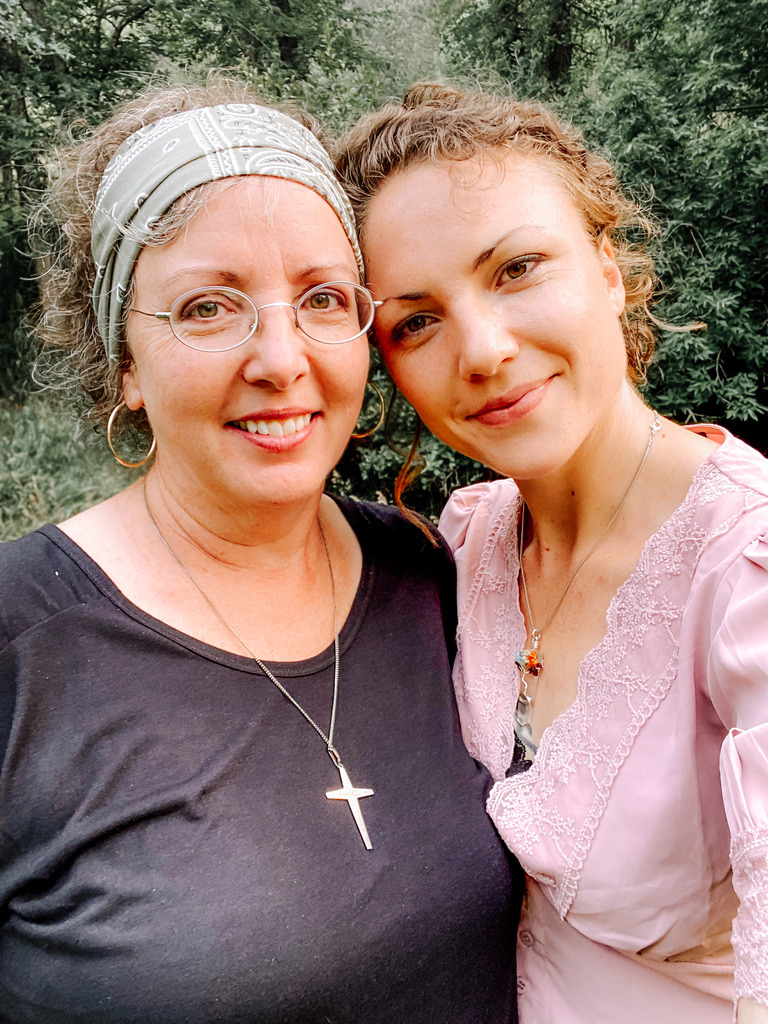
We’re a mother-daughter studio in Vale, near Bear Butte, and family and ranch histories are some of our favorite projects. Tere spent a decade designing and editing pages for the Black Hills Pioneer and 21 years teaching writing, and we handle editing, photo layout, printing and publishing in one place. Book a free call to talk about your family’s book.
Quick answers
How do I start writing a family history?
Decide whether you are writing a narrative history, a genealogy or a memoir, interview older relatives, gather photos and documents, and then research public records such as the South Dakota State Archives in Pierre.
Where can I research South Dakota family history?
The South Dakota State Archives at the Cultural Heritage Center in Pierre, digitized South Dakota newspapers on the Library of Congress Chronicling America site, county records offices, local historical societies and the South Dakota Genealogical Society.
Do I need an ISBN for a family history book?
Not if you are printing copies only for family. You need one if you want to sell it publicly through bookstores, libraries or online retailers.
Writing a book?
Send your first 1,000 words. Tere will edit them free and send back notes and a written quote for the whole manuscript.
 Book editing, publishing, brand and web from Vale, South Dakota. Rooted in faith, family and the prairie.
Recent Comments